


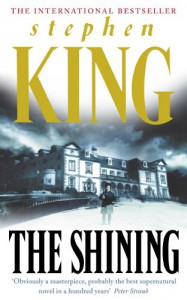
 Marvelously suspenseful! Also NOT entirely similar to the excellent movie you have probably already seen. Written from the perspective of 3 family members and one other character, this novel explores the frightening things that unfold in the off-season when the family sign on as caretakers for the posh but infamous Overlook Hotel in an isolated mountainside location in Colorado. The father, an English teacher and promising writer has just lost a job at a private school due to his alcoholism and violence, and the same factors have threatened his family. His five year old son has some eerie psychic abilities that give him visions of evil events likely to transpire should they actually take up residence at the hotel. Knowing all this up front keeps a reader on the edge of his/her seat from the very start. [a:Stephen King|3389|Stephen King|http://d.gr-assets.com/authors/1362164094p2/3389.jpg] builds the suspense steadily while giving little breaks to lull the reader in between. He shows us the battle the father wages with his weaknesses, the struggle the mother has with whether to trust his recent sobriety and seeming return to the personality of the man she fell in love with, and tremendous difficulties the son has trying to be a willing participant in something he fears will go terribly wrong very soon because of how necessary the job is to maintaining the family's status as an intact unit. Meanwhile, far away in Florida the cook for the resort, who has made a deep connection with the little boy, wonders if he can reach the family in time to save any of them. Add snow, terrifying things happening in and around the hotel, and you have the novel.
 I'm holding off rating this one for now. I am proud to have finished it (combination of Kindle and Audio, sometimes at the same time), but I really feel like I only got about 20 percent of what was going on (and that actually might be optimistic). Based on quotes I've seen from Joyce himself, I don't think I'm meant to understand half of what he was doing with a simple read and without multiple degrees in literature and history, but I also felt like at some level, it would be good to approach it on a level playing field with every other novel I've ever read. What I can say is that there were times I was confused or bored or annoyed, but there were other times I was giggling and enjoying the ride. I have also invested in a Great Courses lecture series on the book by a Dartmouth professor and have committed to giving this another go with guidance from an expert, since I think I will enjoy it a lot that way. This one could end up with anything from 3 to 5 stars, but I'm betting on the high end.
 THERE
THEREwas once a man who, one night between the main course and the sweet at a dinner party, went upstairs and locked himself in one of the bedrooms of the house of the people who were giving the dinner party.
There was once a woman who had met this man thirty years before, had known him slightly for roughly two weeks, in the middle of a summer when they were both seventeen, and hadn't seen him since, though they'd occasionally, for a few years after, exchanged Christmas cards, that kind of thing.
Right now the woman, whose name was Anna, was standing outside the locked bedroom door behind which the man, whose name was Miles, theoretically was. She had her arm raised and her hand ready to--to what? Tap? Knock discretely? This beautiful, perfectly done-out, perfectly dulled house would not stand for noise; every creak was an affront to it, and the woman who owned it, emanating disapproval, was just two feet behind her. But it was her fist she was standing there holding up, like a 1980s cliche of a revolutionary, ready to, well, nothing quiet. Batter. Beat. Pound. Rain blows.
So begins a truly delightful book. The premise is a little zany, with a guest locking himself in a spare room during a party, and the plot unfolding in response. Smith takes this far-fetched premise and weaves a delightful story of the connections between people, tangential as they may be, and the differences they can make in people's lives. In the process, the reader also gets social commentary, history, a little information about science and the arts, quick, intelligent dialogue, and one of the most enjoyable child characters I've read in awhile. This was the one addition to the 1001 List in this edition that I had never heard a thing about, and while I probably would have found it because I would have discovered the author on my various lists of award winners and short-listers, I am delighted to have read it sooner because of the inclusion in the 1001 List. I will be reading more of Ali Smith's work soon!

 [a:David Mitchell|4565|David Mitchell|http://d202m5krfqbpi5.cloudfront.net/authors/1347623450p2/4565.jpg]'s [b:Cloud Atlas|49628|Cloud Atlas|David Mitchell|http://d202m5krfqbpi5.cloudfront.net/books/1344305390s/49628.jpg|1871423] was perhaps my favorite book from last summer. It was an ambitious effort, with multiple genres interwoven, and some really marvelous writing within each segment. It was brilliantly executed, and made me a big fan of Mitchell. Hence I was eager and curious about this novel.
[b:The Thousand Autumns of Jacob de Zoet|7141642|The Thousand Autumns of Jacob de Zoet|David Mitchell|http://d202m5krfqbpi5.cloudfront.net/books/1320540908s/7141642.jpg|7405757] is nothing like [b:Cloud Atlas|49628|Cloud Atlas|David Mitchell|http://d202m5krfqbpi5.cloudfront.net/books/1344305390s/49628.jpg|1871423]. It is simply a wonderfully crafted piece of historical fiction, set in a small trading post of the Dutch East Indies Company on a constructed island in the Nagasaki harbor. It's the late 1790s, and Japan is closed to the West. It is ruled by the Shoguns and their allies. Jacob de Zoet is a Dutch clerk arriving on a ship from Europe with a superior from the company intent on assessing the corruption occurring in Dejima. Before he has arrived on land, he already has a broken nose, and he is paralyzed with anxiety that his talisman of good fortune, a family psalter, will be discovered and confiscated by a regime hostile to all foreign religion. Soon he has met and become enamored of a disfigured Japanese midwife, whom he meets through circumstances too delightful to ruin by previewing them here. Meanwhile he is making no friends among the other Westerners on Dejima, as he is the one who must comb through the records of several years of trading to identify incidences of corruption, of which, of course, there are many. He also meets a mysterious monk who offers to buy the medicinal mercury he has personally brought to trade here as a means of making a small nest egg with which he can marry his fiancee back in Holland. The plot is thick with adventure, international conflict and diplomacy, lots of political maneuvering, and, of course, the complicated love interest. The writing works well, and Mitchell does a marvelous job of creating characters of all sorts through their dialogue. I will give you a view of the setting as Jacob first sees it coming ashore:
"Nagasaki itself, wood grey and mud brown, looks oozed from between the verdant mountains' splayed toes. The smells of seaweed, effluence, and smoke from countless flues are carried over the water. The mountains are terraced by rice paddies nearly up to their serrated summits.
A madman, Jacob supposes, might imagine himself in a half-cracked jade bowl.
Dominating the shorefront is his home for the next year: Dejima, a high-walled, fan-shaped artificial island, some 200 paces along its outer curve, Jacob estimates, by eighty paces deep, and erected, like much of Amsterdam, on sunken piles. "
This is a great book, and I highly recommend it!
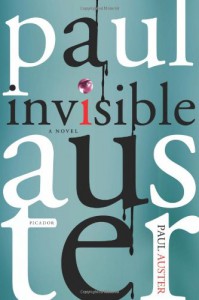 I shook his hand for the first time in the spring of 1967. I was a second-year student at Columbia then, a know-nothing boy with an appetite for books and a belief (or delusion) that one day I would become good enough to call myself a poet, and because I read poetry, I had already met his namesake in Dante's hell, a dead man shuffling through the final verses of the twenty-eighth canto of the Inferno. Bertan de Born, the 12th-century Provençal poet, carrying his severed head by the hair as it sways back and forth like a lantern – surely one of the most grotesque images in that book-length catalog of hallucinations and torments. Dante was a staunch defender of the de Born's writing, but he condemned him to eternal damnation for having counseled Prince Henry to rebel against his father, King Henry II, because de Born cause division between father and son and turned them into enemies, Dante's ingenious punishment was to divide de Born from himself. hence, the decapitated body wailing in the underworld, asking the Florentine traveler if any pain could be more terrible than his.
This is how [a:Paul Auster|296961|Paul Auster|http://d.gr-assets.com/authors/1287451428p2/296961.jpg] introduces us to the protagonist and his nemesis in the novel, [b:Invisible|6345193|Invisible|Paul Auster|http://d.gr-assets.com/books/1317063578s/6345193.jpg|6448995]. This novel takes one year in the life of a bright, attractive, troubled college student, scarred by a family tragedy, and examines it in retrospect in the unfinished manuscript written by his adult self, dying of leukemia. This manuscript is entrusted to a college classmate, now a famous author, to whom he has recently reached out in order to gain something, though what is not clear, through the sharing of the manuscript. The author struggles to discover what if anything, in the shocking manuscript is actually true. It is a fascinating and unsettling tale that takes the reader from New York to Paris and to an invented Caribbean island.
This is not my favorite of Auster's novels, but it was a quick and engrossing, if somewhat disturbing tale.
 Nana put down the bowl of chicken feed. She lifted Mariam's chin with a finger.
"Look at me, Mariam."
Reluctantly, Mariam did.
Nana said, "Learn this now and learn it well, my daughter: Like a compass needle that points north, a man's accusing finger always finds a woman. Always. You remember that, Mariam."
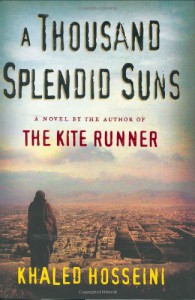
That is a harsh message to give a girl very early in her life, but it is a message that many Afghani women, especially under the years of Taliban rule, learned in brutal detail. [b:A Thousand Splendid Suns|128029|A Thousand Splendid Suns|Khaled Hosseini|http://d.gr-assets.com/books/1345958969s/128029.jpg|3271379] is a painful book to read because it is the story of two Afghani women whose lives intersect in Kabul at a time when being a woman in Afghanistan was basically a life-threatening condition. Despite the inevitable bleakness that comes with the territory, this is nonetheless a beautiful book. [a:Khaled Hosseini|569|Khaled Hosseini|http://d.gr-assets.com/authors/1185239324p2/569.jpg] is a masterful writer who loves his homeland and its history and culture and also clearly loves and respects the women whose plight he illustrates so brilliantly. It took me years to read this book because my mother told me it would make me cry. It did, but it was well worth it. In the end, this is an inspiring story of love and friendship. I also love that Hosseini's work makes Afghanistan and its people so real for me, in a way that a dozen years of news reporting on the American involvement there has failed substantially to do. I can only wish all my fellow Americans could read this book and [b:The Kite Runner|77203|The Kite Runner|Khaled Hosseini|http://d.gr-assets.com/books/1309288316s/77203.jpg|3295919] so that we don't lose sight of the people whose complex and difficult lives our politicians' and military leaders' decisions affect daily.
There are also some wonderful men in the book, by the way. I will close with a description of one of them.
But Mariam's favorite, other than Jalil of course, was Mullah Faizullah, the elderly village Koran tutor, its akhund. He came by once or twice a week from Gul Daman to teach Mariam the five daily namaz prayers and tutor her in Koran recitation, just as he had taught Nana when she'd been a little girl. It was Mullah Faizullah who had taught Mariam to read, who had patiently looked over her shoulder as her lips worked the words soundlessly, her index finger lingering beneath each word, pressing until the nail bed went white, as though she could squeeze the meaning out of the symbols. It was Mullah Faizullah who had held her hand, guided the pencil in it along the rise of each alef, the curve of each beh, the three dots of each seh.
He was a gaunt, stooping old man with a toothless smile and a white beard that dropped to his navel. Usually he came alone to the kolba though sometimes with his russet-haired son Hamza, who was a few years older than Mariam. When he showed up at the kolba, Mariam kissed Mullah Faizullah's hand--which felt like kissing a set of twigs covered with a thin layer of skin--and he kissed the top of her brow before they sat inside for the day's lesson. After, the two of them sat outside the kolba, ate pine nuts and sipped green tea, watched the bulbul birds darting from tree to tree. Sometimes they went for walks among the bronze fallen leaves and alder bushes, along the stream and toward the mountains. Mullah Faizullah twirled the beads of his tasbeh rosary as they strolled, and, in his quivering voice, told Mariam stories of all the things he'd seen in his youth, like the two-headed snake he'd found in Iran, on Isfahan's Thirty-Three Arch Bridge, or the watermelon he had split once outside the Blue Mosque in Mazar, to find the seeds forming the words Allah on one half, Akbar on the other.
Mullah Faizullah admitted to Mariam that, at times, he did not understand the meaning of the Koran's words. But he said that he liked the enchanting sounds the Arabic words made as they rolled off his tongue. He said they comforted him, eased his heart. "They'll comfort you too, Mariam jo," he said. "You can summon them in your time of need, and they won't fail you. God's words will never betray you, my girl."
Muullah Faizullah listened to stories as well as told them. When Mariam spoke, his attention never wavered. He nodded slowly and smiled with a look of gratitude, as if he had been granted a coveted privilege. It was easy to tell Mullah Faizullah things that Mariam didn't dare tell Nana.
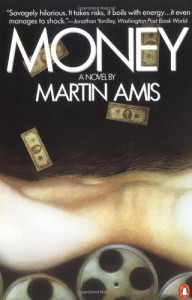 First you need to go back to the quote that starts my review of The Moonstone. Betteredge argues that it is a real problem for the rich that they are idle. Well, Martin Amis takes that premise and doesn't just see the raise, he goes all in. But his setting isn't high society 19th century England. It is nouveau riche late 20th Century London, NY, and LA. He is merciless. Well, almost. You can build a little sympathy for the protagonist, but you may hate yourself for doing it. John Self is a crass, overweight ad-man turned movie director with a taste for booze by the gallon, cigarettes, coccaine, pornography, and violence (against men, women, whoever). He knows he has problems, but he's not doing much about them. Oh, and he loves money. He manages to leave a path of destruction in his wake that Gabriel Betteredge could not even imagine, possibly because the messes he makes cannot even be loosely attributed to an interest in art or natural history.
 I have a hard time deciding whether to recommend this book. On one hand, it's pretty brilliant. On the other hand, you have to live through a guided tour of protagonist John Self's life and brain, and it is a very ugly ride. He spends an incredible percentage of his time falling-down drunk or blacked out. When he's awake, he's usually in a strip club or worse. This guy is beyond uneducated and uncultured. A woman he knows introduces him to books. He reads Animal Farm and doesn't get that it is allegory. Here is his response to reading a book about Hitler: As for Hitler, well, I'm consternated. I can't fucking believe this stuff. Look how far he spread his violence. And I thought I was agressive. Boy, Germany must have had some dizzy spell or drunk on, in the Thirties and Forties there, to have given headroom to a sick little gimp like him. I'm consternated. I can't believe this stuff. And you're telling me it's true? Well, at least he was consternated. And that's why I hung in there with him. That and his description of LA: You come out of the hotel, the Vraimont. Over boiling Watts the downtown skyline carries a smear of God's green snot. You walk left, you walk right, you are a bank rat on a busy river. This restaurant serves no drink, this one serves no meat, this one serves no heterosexuals. You can get your chimp shampooed, you can get your dick tattooed, twenty-four hours, but can you get lunch? And should you see a sign on the far side of the street flashing BEEF-BOOZE--NO STRINGS, then you can forget it. The only way to get across the street is to be born there. All the ped-Xing signs say DON'T WALK, all of them, all the time. That is the message, the content of LA: don't walk. Stay Inside. Don't Walk. Drive. Don't Walk. Run! I tried the cabs. No use. The cabbies are all Saturnians who aren't even sure if this is a right planet or a left planet. The first thing you have to do, every trip, is teach them how to drive. With passages like that, you are tempted to keep reading in spite of the hellish world you are travelling through. You want to know if John will be redeemed. You also want to know what is up with the caller who threatens him anonymously and seems to know his every move. It took me two tries to get through this book. The second time I still wasn't always sure it was worth it, but it is on the 1001 books list, and so I felt inclined to try. This is a funny and scathing critique of a segment of society that certainly needs critiquing, but if you have scruples about reading ugly stuff, it may not be for you.
 Beginning Wide Sargasso Sea, you already know where it is headed. You are entering into the life of the woman in the attic in Jane Eyre. Bronte creates an unsympathetic madwoman, but through the tragic context she creates, Jean Rhys portrays a woman for whom it is impossible not to feel tremendous compassion. We live through Antoinette’s childhood in Jamaica and learn of her arranged marriage to Rochester. We watch that marriage begin in passion amid the beauty of Dominica, and then watch it unravel due to a combination of the circumstances of their marriage, the hostile intentions of others, and their own inabilities to trust one another enough to forge a connection immune to the interpersonal and cultural pressures surrounding them. Finally we get a glimpse of Antoinette’s imprisonment in England, subject to near-constant supervision, called by another name due to her husband’s superstition and insensitivity, and driven by dreams that lead to the ending we already know from Charlotte Brontë‘s novel.
The book captures the ambiance of the author's native Dominica and of Jamaica, and serves as a painful primer on the complex race and class politics operating in those islands in the mid 19th century. Jean Rhys is equally skillful at portraying the painful emotional experiences of the ill-fated couple, neither of whom enters the relationship unscathed after their childhoods. Suspicion is everywhere in this book, founded and unfounded, and the consequences both of ignoring it when it should be heeded and yielding to it when it is false are the basis of all the tragedy that unfolds throughout the novel.
 Pin is an orphaned boy being raised by his prostitute sister. He bums cigarettes off the German soldier who frequents his sister's bed and drinks off the men at the local tavern. He mocks and sings for adults, with whom he is more at ease than with other kids. One day the local resistance committee member is at the bar recruiting, and Pin is asked to steal the German's gun. In this way, Pin is drawn into the local resistance movement and ends up an assistant to the cook of a unit in the mountains. The Path to the Spiders' Nests is Italo Calvino's first novel, and it is quite different stylistically from his later work. However, this edition, published only after years during which the author prohibited republication, contains a preface which is a reflection on the book itself, his writing process, his time own time in the resistance, and the Italian Neo-realist literary movement. This preface is very much like some of Calvino's later work, and is a fascinating look at his ideas about writing. Calvino had clear regrets about the novel, and especially the ways in which he had misrepresented the characters of men he had known in the war in order to fit his literary purposes. The novel is poignant and an interesting read, but I would give the novel itself only three or three and a half stars, The preface, however, makes it a much better and more interesting book.

 And that is how we go on. He asks a question, and I say an answer, and he writes it down. In the courtroom, every word that came out of my mouth was as if burnt into the paper they were writing it on, and once I said a thing I knew I could never get the words back; only they were the wrong words, because whatever I said it would be twisted around, even if it was the plain truth in the first place. And it was the same thing with Dr. Bannerling at the Asylum. But now I feel as if everything I say is right. As long as I say something, anything at all, Dr. Jordan smiles and writes it down, and tells me I am doing well.
While he writes, I feel he is drawing me; or not drawing me, drawing on me--drawing on my skin--not with the pencil he is using, but with an old-fashioned goose pen, and not with the quill end, but with the feather end. As if hundreds of butterflies have settled all over my face, and are softly opening and closing their wings.
But underneath that is another feeling, a feeling of being wide-awake and watchful. It's like being wakened suddenly in the middle of the night, by a hand over your face, and you sit up with your heart going fast, and no one is there. And underneath that is another feeling still, a feeling like being torn open; not like a body of flesh, it is not painful as such, but like a peach; and not even torn open, but too ripe and splitting open of its own accord.
And inside the peach there's a stone.
In Alias Grace, which was shortlisted for the Orange Prize in 1997, Margaret Atwood tackles a historical mystery from a small town in Canada in the mid-19th Century. Did Grace Marks participate in the murder of her employer and his housekeeper/mistress or was she simply an innocent bystander taken hostage by the stable-hand who was convicted and hanged for the crime? The real Grace Marks was sentenced to death, but the sentence was commuted to life in prison, and eventually Grace was released. Atwood approaches the events in the tale through the device of a young doctor, Simon Jordan, who comes to interview Grace in order to test methods of dealing with amnesia. The novel alternates between two points of view. Grace reflects on her current situation, as in the quote above, and also provides edited and unedited versions of the answers to questions Dr. Jordan asks her. The other perspective is the young doctor's. He struggles with big and small decisions about his own personal life, while at the same time trying to discern the truth about the crime Grace is accused of committing. Through these two lenses, the novel explores class issues, sex roles, the nature of memory, and the 19th century spirtualism craze, among other themes. The characters are well and sympathetically drawn. Grace is a strong, perceptive and appealing heroine. Her life history has made her both wise and circumspect in her dealings with those around her. Dr. Jordan is younger and more naive, and serves as a fascinating counterpoint to Grace. Atwood begins each section of the novel with selections from literature and from contemporary documents about the historical murder case. The book gets under your skin, and is very hard to put down. In some ways it is the most straightforward and accessible of the Atwood novels I have read, but that doesn't make it a simple book. It's a suspenseful and fascinating read.

 I was pushing eighteen by the time I caught up with him. I'd grown to my full height of five feet five and a half inches, and Roosevelt's inauguration was just two months away. Bootleggers were still in business, but with Prohibition about to give up the ghost, they were selling off their last bits of stock and exploring new lines of crooked investment. That's how I found my uncle. Once I realized that Hoover was going to be thrown out, I started knocking on the door of every rum-runner I could find. Slim was just the sort to latch onto a dead-end operation like illegal booze, and the odds were that if he'd begged someone for a job, he would have done it close to home.
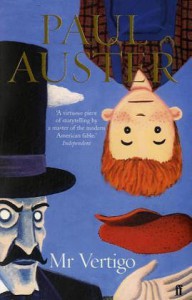
I am a big fan of Paul Auster, and Mr. Vertigo was the delight I hoped for. I actually listened to this one on audio, and the narration by Kevin Pariseau is marvelous. The book is the tale of a St. Louis street kid, nominally being raised by an uncle whose idea of raising a kid is beating him a lot, who is offered a chance to "learn to fly" by a mysterious man who approaches him out of the blue one day. The story follows Walter Clairborne Rawley as he learns from Master Yehudi and becomes "Walt the Wonderboy." Their fortunes rise and fall with the those of the era--the 1920s and 30s, and in the course of his time with Master Yehudi, Walt grows and changes from a bigoted and defensive kid, to someone much more complex. As their fortunes shift, we watch the choices Walt makes, for better and for worse, driven by dreams, loyalty, revenge, and desperation. This is a hard book to describe. It is about so many things. But I can tell you this, by the end of the novel, you may secretly believe that people can, under just the right circumstances, fly.
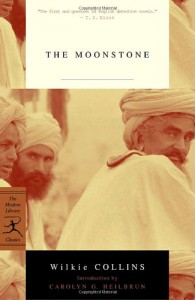 Gentlefolks in general have a very awkward rock ahead in life--the rock ahead of their own idleness. Their lives being, for the most part, passed in looking about them for something to do, it is curious to see--especially when their tastes are of what is called the intellectual sort--how often they drift blindfold into some nasty pursuit. Nine times out of ten they take to torturing something, or to spoiling something--and they firmly believe they are improving their minds, when the plain truth is, they are only making a mess in the house. I have seen them (ladies, I am sorry to say, as well as gentlemen) go out, day after day, for example, with empty pill-boxes, and catch newts, and beetles, and spiders, and frogs, and come home and stick pins through the miserable wretches, or cut them up, without a pang of remorse, into little pieces. You see my young master, or my young mistress, poring over one of their spiders' insides with a magnifiying-glass; or you meet one of their frogs walking downstairs without his head--and when you wonder what this cruel nastiness means, you are told that it means a taste in my young master onr my young mistress for natural history.The Moonstone by Wilkie Collins has been described as the first British detective novel. I didn't know that was what it was when I signed up to read it with a group. Mysteries are one of my guilty pleasures and I tend to read them quickly. According to the group reading schedule, I should only be half way through the book now, but instead, I couldn't help myself and finished it. I really enjoyed the characters, several of whom contribute sections of their own in the narrative, allowing for an amusing range of voices, prejudices, and perspectives. The mystery, once it gets going, is fun to follow and keeps us puzzling away with the characters until the end. This was my introduction to the work of Wilkie Collins, and I am now looking forward to reading more of his work. My one objection to the work is that India, a place to which I have a particular atraction, does not come off very well in this novel. It's people are painted in a pretty superficial and stereotyped way. Still, that is not so unusual for the period, and I'm willing to forgive it, in exchange a chance to meet characters like Betteredge, the butler and author of the above quote, who turns to Robinson Crusoe for guidance as some pious Christians turn to the Bible, and Sergeant Cuff, the detective who fights over how best to grow roses with the gardener. Miss Clack, a relentlessly pious pamphleteer, is not to be missed. Look forward to her section!
 4.5 stars.
My grandparents had to live their way out of one world and live into another, or into several others, making new out of old the way corals live their reef upward. I am on my grandparents' side. I believe in Time, as they did, and the life chronological rather than in the life existential. We live in time and through it, we build our huts in its ruins, or used to, and we cannot afford all these abandonings.
Angle of Repose is a remarkable book. In the story of a recently disabled historian moving back to the family homestead to write the tale of his famous illustrator/author grandmother and her family, Wallace Stegner manages to tackle a myriad of issues and themes. He does so in language that is at times breath-taking. Lyman Ward, alone with his task except for an aging couple long associated with the family who care for him and their twenty-something daughter who assists with his work, faces the changes his disability has wrought in his life and family, while exploring the challenges experienced by his grandmother as she dealt with the vicissitudes of his grandfather's mining engineer career in the 19th century western wilderness. Stegner's novel explores the culture wars of the 1970s in the conversations between Lyman and his assistant, the cultural divides of the 19th century in his Eastern upper class grandmother's attempts to reconcile her life living at the fringes of civilization in the West, and the family divides of both generations in their efforts to manage unanticipated hardship. The book is about America, about family life, about love, and loss, and loyalty. It is about human frailty, the capacity to endure, and the possibilities and impossibilities of forgiveness.